Average Salary For A Sommelier . The average salary for a sommelier is $75,328 per year in australia. Salary for a master sommelier varies depending on your years of experience and the geographic location in which you work, as locations with larger wine cultures and more. Royal Caribbean скайп ИНТЕРВЬЮ ИСМИРА from www.ismira.ru The average salary for a sommelier is $16.23 per hour in vancouver, bc. Sommeliers earn an average yearly salary of $40,569. The average salary for a sommelier is r 22 805 per month in south africa.
Average Cost Vs Fifo. 100 chairs sold x $20 = $2,000. Fifo realized gains means a smaller open unrealized gain and avg cost realized gain means a larger open unrealized gain.
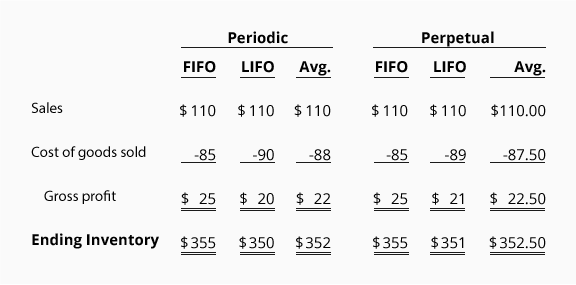
Perpetual FIFO, LIFO, Average, and Comparisons AccountingCoach from www.accountingcoach.com
The main advantage of the wac method is its simplicity. Fifo, or first in, first out, refers to recording the oldest inventory items to be sold first. $16 x 100 = $1,600.
Under Fifo, However, The Costs Are Pulled.
Fifo (first in, first out. At the end of an accounting period, let's assume you sold 100 total chairs. But it is also more likely that the store will run out periodically.
As Per Fifo, 10 Qty @ $12 And 2 Qty @ $15 Will Been Considered For Sale.
Average cost doesn’t take this into account. The weighted average costs, using both fifo and lifo. In the settings > general options section of your retail account, you have a choice between two possible cost methods:.
While At The Warehouse Which Has The Average Costing Price, The Purchase Price Used In Both Sales Orders Is $ 55.00, The Average Purchase Price.
As we’ve mentioned, the wac method competes with two other methods for inventory valuation: Moving average price represents a current delivered price while the =. Fifo, or first in, first out, refers to recording the oldest inventory items to be sold first.
Rs80,000 Divided By 500 = Rs160/Chair Cost Of Goods Sold:
It will also be sorted by default based on the date acquired. 200 chairs @ rs100 = rs20,000 300 chairs @ rs200 = rs60,000 total number of chairs = 500. It’s by far the easiest way to track your inventory and is perfect for new or small businesses.
In This Context, How Do I Calculate A Weighted Average?
The next month, you buy another 300 chairs for $20 per unit. Weighted average in process costing. The weighted average costs, fifo are as follows :


Comments
Post a Comment